MARCLAIMED Concludes Three Years of Research and Innovation at its Final Conference in Barcelona

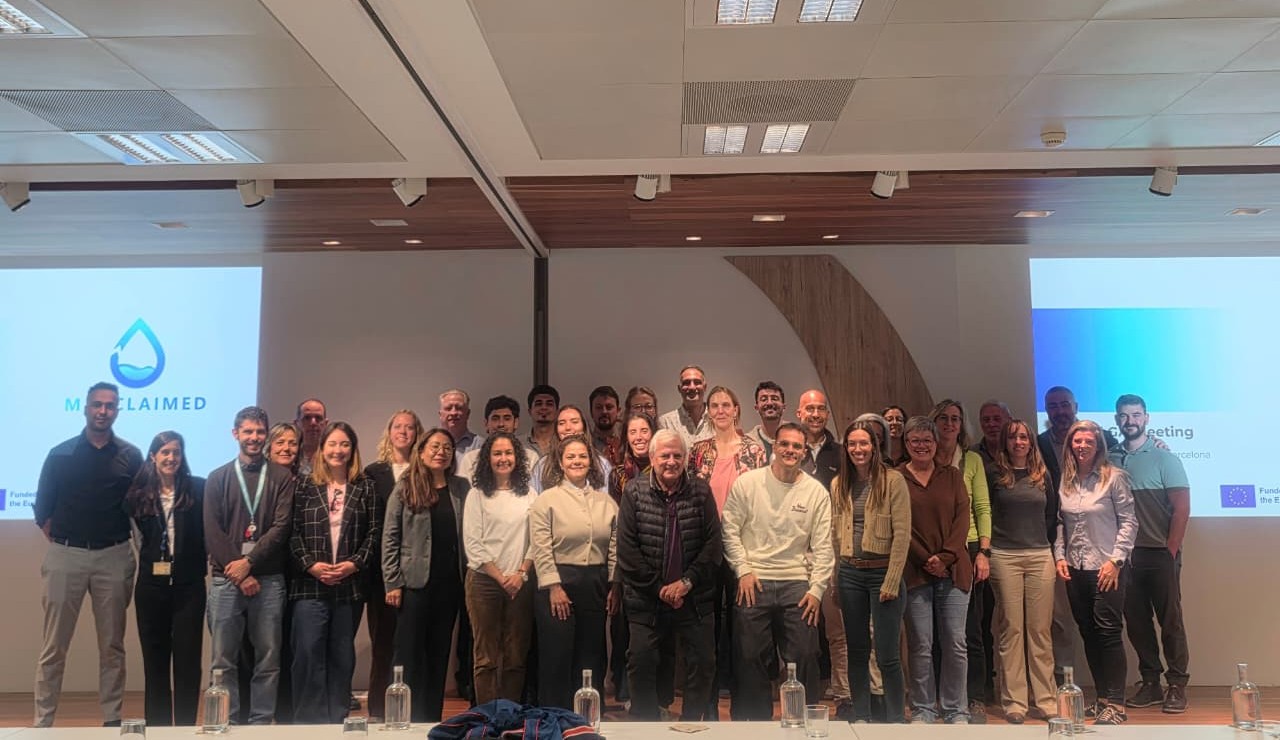
Barcelona, 18 November 2026 – The EU-funded MARCLAIMED project gathered partners, researchers, policymakers and water-sector stakeholders in Barcelona on 17–18 November for its Final General Assembly and Conference, marking a major milestone after three years of collaboration to advance Managed Aquifer Recharge (MAR) using Alternative Water Resources (AWR).
Hosted at the Veolia offices in Barcelona, the two-day gathering provided an opportunity to review the project’s achievements, showcase innovative tools and demonstration-site results, and discuss the policy, technical and societal conditions needed to support the wider implementation of MAR solutions across Europe.
Reviewing Three Years of Progress and Exploring Solutions in Practice
The first day, 17 November, was dedicated to the project’s Final General Assembly, during which consortium partners reviewed the progress achieved across the different work packages, discussed remaining activities and deliverables, and reflected on the lessons learned throughout the project.
Discussions covered the development of the Integrated Decision Support Tool (IDST), the results from the three demonstration sites, economic and social considerations, and the potential transferability of MARCLAIMED solutions to different geographical and industrial contexts. Partners also exchanged insights on the project’s communication and dissemination achievements and the final recommendations of its External Expert Advisory Board.
A highlight of the day was the technical field visit to the infiltration ponds at Sant Vicenç dels Horts, in the Llobregat area, one of MARCLAIMED’s demonstration sites. The visit offered participants an opportunity to explore Managed Aquifer Recharge in practice and better understand how alternative water resources can contribute to sustainable groundwater management and improved resilience to water scarcity.
Showcasing Innovative Tools and Demonstration-Site Results
On 18 November, the MARCLAIMED Final Conference brought together project representatives and external stakeholders to present the project’s main achievements and explore their potential for future applications.
Following the opening session, Project Coordinator Sara Espinosa (CETAQUA) introduced the project’s final results and its contribution to advancing the integration of Managed Aquifer Recharge and Alternative Water Resources into water management strategies.
A central highlight was the presentation of the Integrated Decision Support Tool (IDST), developed to support the planning, monitoring and implementation of MAR solutions.
Bringing together six tools, three demonstration sites and one integrated platform, the IDST combines real-time monitoring capabilities with long-term planning and data-driven decision support. Its development represents an important step towards helping water managers and decision-makers assess the feasibility and implementation of MAR solutions under different environmental and operational conditions.
The conference also presented the results and lessons learned from MARCLAIMED’s three demonstration sites:
- Llobregat, Spain: Exploring the use of treated water for aquifer recharge and more sustainable groundwater management.
- Comporta, Portugal: Investigating the use of treated wastewater to support aquifer recharge while addressing water quality and environmental considerations.
- Texel, the Netherlands: Demonstrating approaches to collecting, treating and storing agricultural drainage water underground for potential reuse during periods of water scarcity.
The experiences shared across the three sites reinforced a central message: there is no universal technical solution for Managed Aquifer Recharge. Successful implementation requires a thorough understanding of local hydrogeological conditions, robust system design, appropriate water treatment and continuous monitoring.
The Texel demonstration, in particular, highlighted the importance of understanding the subsurface, designing resilient systems and integrating monitoring and citizen science into long-term water management practices.
These findings underline the need to replicate successful principles while adapting technical solutions to local conditions and stakeholder needs.
Strengthening European Collaboration Through AWR4Climate
The conference also provided an opportunity to strengthen cooperation among European research and innovation initiatives working on alternative water resources.
Representatives of the AWARD and RECREATE projects contributed to the programme, highlighting the collaborative efforts undertaken within the Alternative Water Resources for Climate Cluster (AWR4Climate), which brings together MARCLAIMED, AWARD and RECREATE.
Through this collaboration, the three projects aim to exchange knowledge, maximise the impact of their research and support the integration of Alternative Water Resources into European water management strategies.
The conference also featured contributions from the LIFE Matrix project, further encouraging exchanges on innovative approaches to water reuse and resource management.
An important outcome of the AWR4Climate collaboration is an upcoming joint policy brief, which will outline recommendations to support the wider uptake of Alternative Water Resources across Europe.
Among its key messages are the need to unlock the untapped potential of alternative water resources, extend the scope of the EU Water Reuse Regulation and harmonise relevant European regulations and standards, and secure long-term funding and investment for sustainable water management solutions.
From Innovation to Policy: Overcoming Barriers to MAR Implementation
Beyond the presentation of technological results, the final sessions addressed the regulatory, environmental and societal challenges associated with scaling up Managed Aquifer Recharge.
A dedicated policy session, “From Recharge to Resilience: Integrating MAR and Alternative Water Resources under EU Policy,” explored the importance of managing health, environmental and operational risks while strengthening social acceptance, particularly in the context of drought management.
The conference concluded with a panel discussion entitled “The MARCLAIMED Legacy: Overcoming Barriers to Mainstream Reclaimed Water in Aquifer Recharge.”
Bringing together representatives from the demonstration sites and water-sector organisations, the discussion examined the conditions required to move innovative MAR solutions beyond research and demonstration towards wider implementation.
Participants highlighted the importance of supportive regulatory frameworks, viable economic approaches, continuous monitoring and stakeholder engagement.
One of the central messages emerging from the discussions was that social acceptance is an ongoing process, requiring transparency, collaboration and trust among water managers, authorities, local communities and end users.